The Islamic Republic’s failures have forced a question its opponents cannot avoid: what stable order can replace it? Rejecting clerical rule is essential. But opposition alone cannot build the institutions needed to protect individual freedom, preserve national unity and prevent another concentration of unchecked power.
For Iran, I believe the answer lies in a constitutional balance between monarchy and democracy. I call this the Pahlavi System. The monarchy would provide national continuity, while democratic institutions would give citizens the power to govern themselves. Both would operate within constitutional limits.
The principle has deep roots. Aristotle examined mixed government, while Machiavelli argued that monarchical, aristocratic and popular elements could restrain one another. Their relevance to Iran lies in a practical insight: no ruler, elite or political majority can safely be trusted with unlimited authority.
The War of Institutions
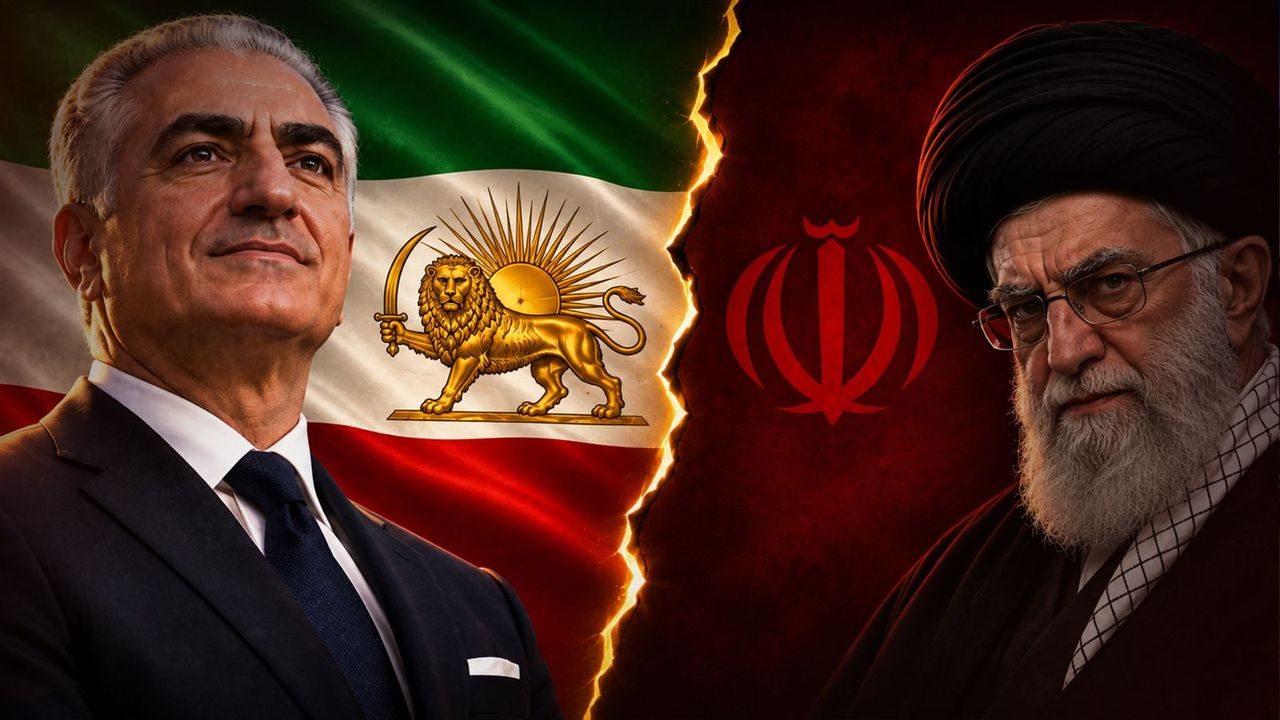
Iran’s contemporary struggle can be understood as a war of institutions between the tradition of Iranian monarchy, represented today by Reza Pahlavi, and the clerical state established after 1979. This is the framework through which I understand the conflict, while recognising that Iranians hold diverse views about their country’s future.
The Pahlavi dynasty played a central role in building modern Iran. Under Reza Shah and Mohammad Reza Shah, the country strengthened its central administration, expanded secular education and built major infrastructure. Women’s education and participation in public life grew. Women gained voting rights in 1963, while subsequent reforms improved their legal position within the family.
These achievements deserve recognition. So do the shortcomings. The Pahlavis governed within a constitutional framework, but formal parliamentary authority did not consistently restrain royal power in practice. A credible argument for restoration must confront that record and explain how a future monarchy would remain accountable to the constitution.
I believe Iran can draw on the dynasty’s modernising achievements while learning from its failures. Restoration should recover the institution’s capacity to unite the country and support its development, with enforceable restraints on those exercising power.
The Shahdom, the term I use for Iran’s institution of monarchy, also carries significance beyond individual rulers. Iran’s literary and historical traditions connect kingship with national responsibility, just rule and continuity. For monarchists, that inheritance offers a foundation for a state grounded in Iran’s own history, free from the supremacy of clerical ideology.
A Generation Looking Beyond Clerical Rule
Many younger Iranians have known only the Islamic Republic and its restrictions. Their demands for personal freedom and accountable government challenge the regime’s claim to represent the country’s future. Whether monarchy can command their support is a separate question, and the available surveys give different answers.
The Iran Project Phoenix survey published in February 2025 reported that 89.42 per cent of respondents supported Reza Pahlavi to lead a transition and 79.16 per cent preferred parliamentary monarchy. An ERFI survey conducted in February 2023 reported 79.9 per cent support for Pahlavi among the leaders presented and 60.4 per cent support for constitutional monarchy. These figures describe their respondents; ERFI itself characterised its sample as only partially representative.
GAMAAN’s June 2024 survey found substantially lower support: approximately 31 per cent selected Pahlavi among political figures, while around 21 per cent supported monarchy. He nevertheless ranked first among the opposition figures measured. His support was higher among older respondents than younger ones, and no individual commanded majority support.
The surveys differ in their questions and methods, so they cannot be treated as a single national verdict. They establish Pahlavi’s prominence while showing the work monarchists still have to do. Rejection of clerical rule creates an opportunity. Winning public consent requires persuasion.
The Pahlavi Name in the Streets
Pahlavi’s prominence extends beyond polling. During the January 2026 protests, videos reported by Iran International showed pro-monarchy slogans in several cities, including “This is the final battle, Pahlavi will return”. These chants reveal an active monarchist constituency, although they cannot speak for every protester.
The regime answered the wider protest movement with violence. The UK government’s country bulletin describes demonstrations across all 31 provinces, a violent crackdown and a near-total communications blackout. It records thousands of confirmed deaths, alongside higher estimates and cases still under investigation.
Iran International reported more than 36,500 deaths during the crackdown on 8 and 9 January, citing evidence it had reviewed while acknowledging that security restrictions and communications limits prevented independent verification.
For monarchists, the Pahlavi slogans express a demand for national renewal as well as dynastic restoration. Our responsibility is to explain what that renewal would mean for people who have risked their lives demanding freedom.
How the Golden Balance Would Work
What I call the Pahlavi Doctrine brings together pragmatism, modernisation, civic nationalism, secular government and economic freedom. It rejects the division of Iranians into rival religious, class or ethnic camps. Citizenship should unite people without requiring them to surrender their individual rights.
The Pahlavi System would give those principles institutional form. The monarchy would provide continuity, national unity and institutional memory. Elected institutions would provide representation, legislation, accountability and popular participation. Each would have defined responsibilities and limits.
The Shah, as I envisage the role, would safeguard territorial integrity and the constitution, serving as a neutral arbiter and an advocate for the people. That role would include constitutionally defined emergency responsibilities. Such powers would themselves need enforceable limits. Emergency authority cannot become a route to permanent, unchecked rule.
Elected leaders would likewise remain bound by the constitution. An electoral victory must never entitle a government to suppress opposition, override individual rights or dismantle the institutions that hold it accountable. Political and economic elites would contribute expertise without acquiring a right to dominate.
This is the Golden Balance I advocate: a constitutional division of authority that allows competent leadership and democratic participation to strengthen one another. Its success would depend on how those restraints work in practice.
For Iran, the purpose is concrete. Separate religious authority from government. Protect freedom of conscience. Rebuild the economy. Preserve territorial integrity. Give citizens a meaningful say in how they are governed. These are the standards by which any proposed restoration should be judged.
A Future Iranians Must Choose
The case for Pahlavism rests on what it can offer Iran now. The country needs institutions capable of surviving political conflict, protecting liberty and commanding loyalty beyond a single party or ideology.
I believe a constitutional Shahdom under the Pahlavi dynasty offers the strongest foundation for that future. Its historical roots can help sustain national unity through a difficult transition, while democratic institutions give citizens the means to choose their government and replace it peacefully.
That case must earn the freely expressed support of Iranians. Monarchists should welcome the obligation to persuade, because a restoration that disregards public consent would undermine its own constitutional promise.
Iran has endured decades of a state claiming authority over its citizens’ consciences. It deserves a government that protects their freedom and serves their ambitions. The Pahlavi inheritance gives us a foundation on which to build. Our task is to show that it can sustain the free, secular and prosperous country Iranians deserve.