Iran stands at a historic crossroads. The question is no longer whether the clerical system has failed. Its economic failures, totalitarian and theocratic rule, domestic and international terrorism, massacres of protesters, mass executions, fueling of regional instability, cultural assault, and political illegitimacy are evident. The question is what stable order can replace it. The answer lies in the classical preference for balance: a political arrangement avoiding the excesses of unchecked elitism and unchecked populism.
Aristotle identified the most stable practical constitution as a mixed regime, or “polity,” in which neither the few nor the many dominate. The Socrates of Plato’s Republic compared governing a state to navigating a ship, emphasizing the knowledge necessary for competent leadership. Plato criticized democracy and advocated rule by philosopher-kings, emphasizing wisdom, merit, and competence in governance.
Polybius later described the cycle of political systems collapsing into their corrupt counterparts, known as anacyclosis, and praised Rome’s mixed system for its durability. Machiavelli, drawing on Polybius, argued in the Discourses that lasting stability requires combining monarchical, aristocratic, and popular elements so that each checks the others.
A country requires both its elites and its people. The rights of both must be upheld; their coexistence is the foundation of lasting stability, individual freedom, and prosperity. Neither side should try to subjugate the other. For Iran, that synthesis is the Pahlavi System: the Golden Balance between monarchy and democracy.
The War of Institutions in Iran
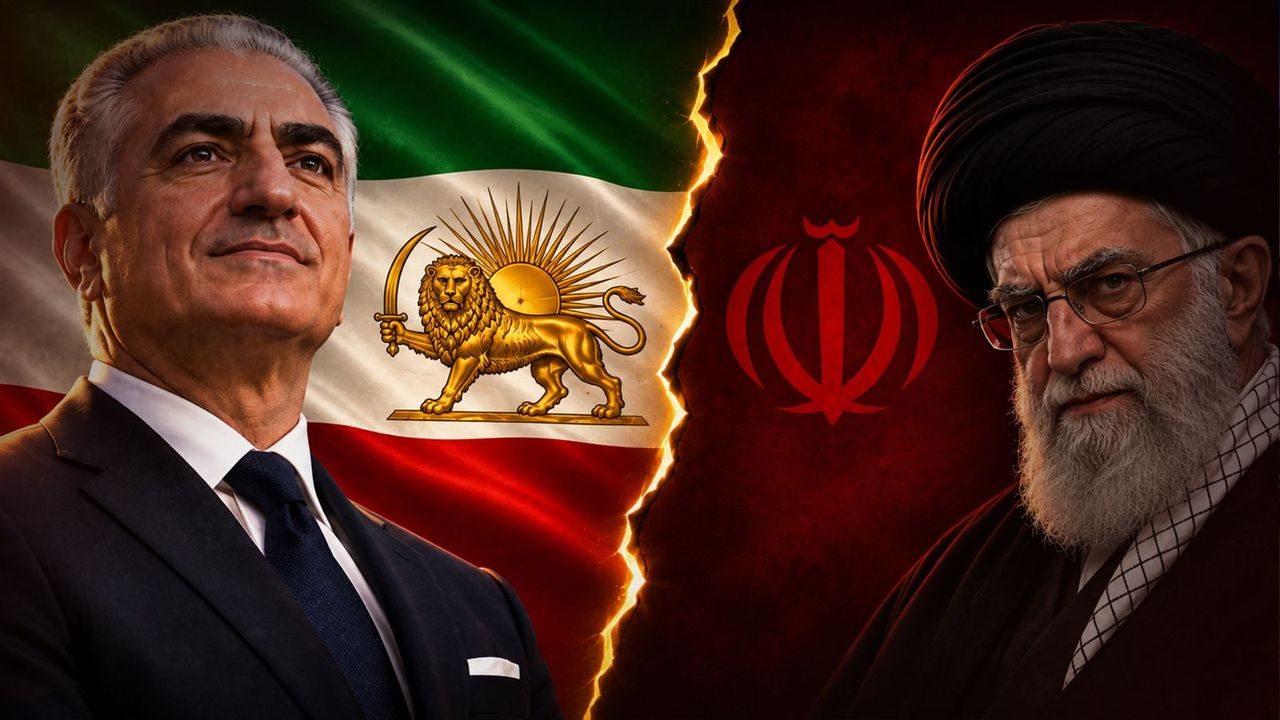
Iran’s contemporary struggle continues a historical contest between two competing institutions: the monarchy, embodied by the Pahlavi Dynasty and today by Shah Reza Pahlavi, and the clerical establishment.
The Pahlavi Dynasty built the foundations of modern Iran. Under Reza Shah the Great and his son Mohammad Reza Shah, Iran underwent a profound transformation. The dynasty ruled within a constitutional framework, although the concentration of political power under the Shahs must be distinguished from the constitutional balance advocated here.
Reza Shah’s decision to request that foreign governments use the country’s native name, Iran, rather than Persia reflected the dynasty’s emphasis on national identity, historical heritage, and continuity. It represented the pro-Iran characteristics of Iran’s Shahdom, as discussed in Cambridge University Press’s account of the change from Persia to Iran.
Emerging from the constitutional framework established by the Constitutional Revolution, the Pahlavi System advanced women’s emancipation, modern education, healthcare, and judicial institutions while confronting clericalism and the semi-feudal order of the pre-Pahlavi era.
The Pahlavi Shahs challenged tribal power, feudal structures, clerical domination, and systemic restrictions on women. Slavery was formally abolished under Reza Shah. They built modern infrastructure, universities, hospitals, railways, highways, aviation, judicial institutions, and a modern unified military.
Women gained voting rights and greater rights concerning divorce and child custody. The record includes modernization, secularization, economic development, and the preservation of national unity and heritage. These changes are documented in accounts of Pahlavi administration, the Pahlavi economy, women’s movements, and women’s suffrage, as well as the histories of the Trans-Iranian Railway and slavery and emancipation in Iran.
Historically, the Shahanshahi, the Iranian Shahdom, has been associated with safeguarding Iran’s identity, national unity, territorial integrity, heritage, culture, and civilization. In the constitutional vision advanced here, the Shah serves as a unifying figure, a neutral arbiter and attorney of the people, and a symbol and agent of national continuity, particularly during domestic crises and foreign threats.
Iran’s literary tradition, mythology, and heritage, especially the Shahnameh, celebrate wise Shahs who protect the country and criticize rulers who fail their responsibilities. The institution of Shahdom is deeply embedded in Iranian culture, national heritage, and civilization. The Persian concept of kingship cannot be understood merely by treating it as another name for a European monarchy.
Opposing this institution is the clerical establishment that dominates the Islamic Republic. From its earliest days, the revolutionary system moved against elements of Iranian heritage and cultural life. Yet Iranian society continued resisting attempts to subordinate its national traditions to the regime’s ideology. Observances such as Yalda and Nowruz remain living expressions of that continuity.
Khomeini’s rejection of Iranian nationalism was particularly revealing. His pan-Islamist project nevertheless proved contradictory: the Shia regime restricted Sunni minorities and suppressed religious and national freedoms. The Islamic Ummah became a rhetorical instrument of political control rather than a genuine transnational community.
When Khomeini was asked on the Air France plane returning him to Iran how he felt about going back, he answered, “Hich,” meaning “nothing.” The exchange is recounted in PBS’s account of his return. To me, this was not an incidental remark. It expressed the distance between his ideological project and the Iranian national inheritance.
His April 1, 1979 address set out a revolutionary Islamic vision for remaking the country. My argument is that this project was fundamentally hostile to the Shahdom heritage through which Iran had understood much of its historical continuity.
Iran’s national continuity makes this conflict especially significant. Its political identity reaches back to the Achaemenid Empire, Cyrus the Great, and Darius the Great. Cyrus united peoples under an imperial state, while Darius identified himself as Persian and Aryan. These ancient identities should not be confused with the modern European concept of a nation-state, but they remain part of the historical inheritance through which Iranians understand their country.
Today, that continuity exists in Persian remaining the country’s lingua franca and Nowruz continuing as a living national tradition. The name Iran derives from the historical Iranian designation associated with the term Arya. Mohammad Reza Shah’s title, Aryamehr, meaning “Light of the Aryans,” deliberately invoked that inheritance.
The clerical assault on Iran’s national and historical continuity is therefore not merely a cultural disagreement. It represents an attempt to sever the nation from its historical foundations. For monarchists, this is why the Shahdom remains a pro-Iran national institution, while Islamism represents an ideological force hostile to Iran’s heritage, identity, and civilization.
The Generational Shift in Iran
The institutional struggle has entered a new phase through generational change. Iranian society has increasingly moved from Islamist political discourse toward secularism and civic nationalism. The younger generation, particularly Gen Z, demands both the revival of national identity and the establishment of a modern, secular, democratic state. In the argument advanced here, these aspirations converge in the Pahlavi Dynasty, in Pahlavism, and particularly in the leadership of Shah Reza Pahlavi.
His standing is reflected in surveys and political research, although the results must be read according to their different methods and respondent groups. The Iran Project Phoenix survey published in February 2025 reported that 89.42 percent of respondents supported Reza Pahlavi to lead a transitional period. The same survey reported that 79.16 percent preferred a parliamentary monarchy. These are the survey’s reported findings, rather than an independently established electoral mandate.
The Empirical Research and Forecasting Institute’s February 2023 report reported 79.9 percent support for Reza Pahlavi over the political leaders presented and 60.4 percent support for a return to constitutional monarchy.
GAMAAN’s 2022 survey also placed Reza Pahlavi ahead of the other political figures measured. Its later report on political preferences in 2024 provides further material for examining his position. These surveys should not be treated as interchangeable, but they make his role impossible to dismiss.
His popularity has also been visible in the streets. Pro-Pahlavi slogans have accompanied demonstrations for years, including gatherings associated with Cyrus the Great’s tomb. Reporting on the October 2016 gathering records the political significance of that national commemoration.
This phenomenon became prominent again during the January 2026 uprising. Reza Pahlavi’s calls for demonstrations formed part of the unfolding confrontation, documented in Associated Press coverage and the UK government’s country bulletin.
Demonstrators chanted “Javid Shah,” meaning “Long live the Shah,” and “This is the final battle, Pahlavi will return.” Coverage from multiple cities, alongside reporting on pro-monarchy chants and analysis of protest slogans, shows the visibility of the Pahlavi name.
For supporters, “Javid Shah” expresses more than loyalty to an individual. It brings together national heritage, opposition to the Islamic Republic, and the aspiration for a different political order. The slogan’s historical resonance helps explain why it has become an important rallying point for pro-Shahdom and patriotic aspirations.
The uprising was met with brutal repression and mass killings, including the deaths of women and young people. Iran International reported more than 36,500 deaths during the January 8–9 crackdown, citing classified government reports and witness accounts. The figure could not be independently verified.
The political significance is unmistakable: the Pahlavi name has become a unifying symbol through which national heritage, secularism, modernization, individual freedoms, constitutional order, rule of law, and opposition to the Islamic Republic converge.
The Generational Shift in Iran is therefore not merely demographic. It is political and institutional. It reflects a preference among supporters for an alternative that reconciles historical continuity with modern democratic aspirations.
Resurgence of the Pahlavi Doctrine
This transformation has produced a resurgence of the Pahlavi Doctrine. As I use the term, it embodies pragmatism, political realism, the modernization and rejuvenation of Iran, industrialization, classical liberalism and, in its contemporary expression, libertarianism, civic nationalism, and secularization.
Its foundation is a civic society rather than a tribal one, a secular state rather than clerical government, and economic and political freedom rather than ideological control. Pahlavism rejects tribalism in Iran, from religious tribalism, such as Islamism, to class tribalism, such as Marxism, and ethnic tribalism, such as ethnofascism.
The Pahlavi System as Iran’s Golden Balance
The Pahlavi Doctrine is the practical embodiment of the preference for balance and what works. The Pahlavi System is, in this sense, an Aristotelian system, embodying the Golden Mean through a constitutional balance between monarchical continuity, institutional competence, and democratic participation.
Its objectives are security and stability, followed by individual freedoms and prosperity. These are complementary foundations of a functioning state.
The Golden Balance is not simply a compromise between monarchy and democracy. It is a division of political functions according to their respective strengths. The monarchy provides continuity, national unity, institutional memory, protection for territorial integrity, rule of law, and strategic stability.
It is the container and hardware for the contents and software: secular and democratic institutions providing representation, accountability, legislation, and popular participation. Neither should become absolute, as absolutism leads to instability.
It is a constitutional architecture of mutual restraint: a Shah without unchecked sovereignty, democracy without unrestricted and harmful populism, elites with responsibilities but without oligarchic domination, and a people empowered without sacrificing institutional stability.
Tradition must provide continuity without preventing progress, while modernity must advance without dissolving national identity. The Golden Balance of the Pahlavi Doctrine can provide that.
Aristotle’s mixed polity, Polybius’s mixed system, and Machiavelli’s institutional checks point toward a principle of balancing competing forces. The Pahlavi System seeks to institutionalize this coexistence through a monarchical head of state serving as the guardian and agent of national unity, identity, and continuity.
The Shah would be a guarantor of stability and protector of territorial integrity, the rule of law, and the constitution: a neutral arbiter and attorney of the people, with constitutionally defined emergency roles and duties, alongside democratic mechanisms protecting individual rights and popular participation.
In Iran, this balance has concrete historical meaning. It restores the separation of state and mosque, reopens the path toward modernization and economic freedom, and reaffirms the national identity the clerical regime has attempted to undermine. Simultaneously, it addresses the democratic expectations of post-1979 generations.
The January 2026 uprising demonstrated the political significance of this convergence. The Pahlavi name became a rallying point in Iran and abroad, not merely for restoring a dynasty, but for expressing a broader demand for national renewal and a different institutional future.
The Return of Shah Reza Pahlavi and Pahlavism to Iran
The resurgence of the Pahlavi Doctrine is not nostalgia. It is the reappearance of a practical institutional idea that combines Iran’s historical experience with the classical requirement of political balance.
The central question facing Iran is not simply monarchy versus republic. It is whether the country can reconcile national continuity with individual freedom, institutional stability with democratic participation, and competent leadership with popular representation. That is the Golden Balance.
The Pahlavi System represents monarchy without absolutism, democracy without extreme populism, tradition without stagnation, and modernization without the destruction of national identity. It seeks to establish a political order in which the Shah safeguards national continuity while democratic institutions empower the people to govern themselves.
The Generational Shift has changed Iran’s political landscape. The Pahlavi institution has re-emerged at the intersection of national identity and modern aspirations, offering a constitutional vision beyond the institutional failures of the Islamic Republic.
Iran does not merely need to replace a government. It needs to rebuild and restore its native and original state, the Iranian Shahdom under the Pahlavi Dynasty and the Pahlavi Doctrine: free, stable, secure, secular, democratic, modern, prosperous, and nationally coherent.
Iran is the land of the Shahs, and in the land of the Shahs, the Shah will never die, and he always comes back. That is the cycle of Iranian history, and there is no escape from it. Shah Reza Pahlavi will come back. This is the promise of Iran’s history.
It is not simply about the return of a dynasty. It is the return of an institutional idea that works, and for Iran, that idea has a name: Pahlavism.